Braided vs Regular Dog Chews: Does the Shape Actually Matter?

Walk into any pet store and you'll see chews in two forms: straight sticks and braided versions. Does the shape actually matter, or is it just a marketing gimmick? The answer is: it actually matters quite a bit, and for reasons that directly affect your dog's chewing experience and safety.
What Makes Braided Chews Different
Braiding creates structural complexity that straight chews don't have. When three strands of material are woven together, they create multiple angles of resistance that slow dogs down significantly, more surface texture for better dental cleaning, and longer chew sessions — the complexity means dogs take more time to work through a braided chew vs. a straight one of the same length.
When to Choose Braided vs Straight
Choose braided when your dog finishes straight chews too quickly, you want to maximize dental cleaning contact, or you need a longer calm period during travel or vet visits.
Choose straight when introducing a new chew type, working with a puppy or senior with reduced jaw strength, or when your dog simply prefers simpler textures.
Are Braided Chews Harder to Digest?
No — the braiding is just a structural arrangement of the same material. A braided bully stick is the same beef pizzle as a straight one, just shaped differently. Digestibility is identical.
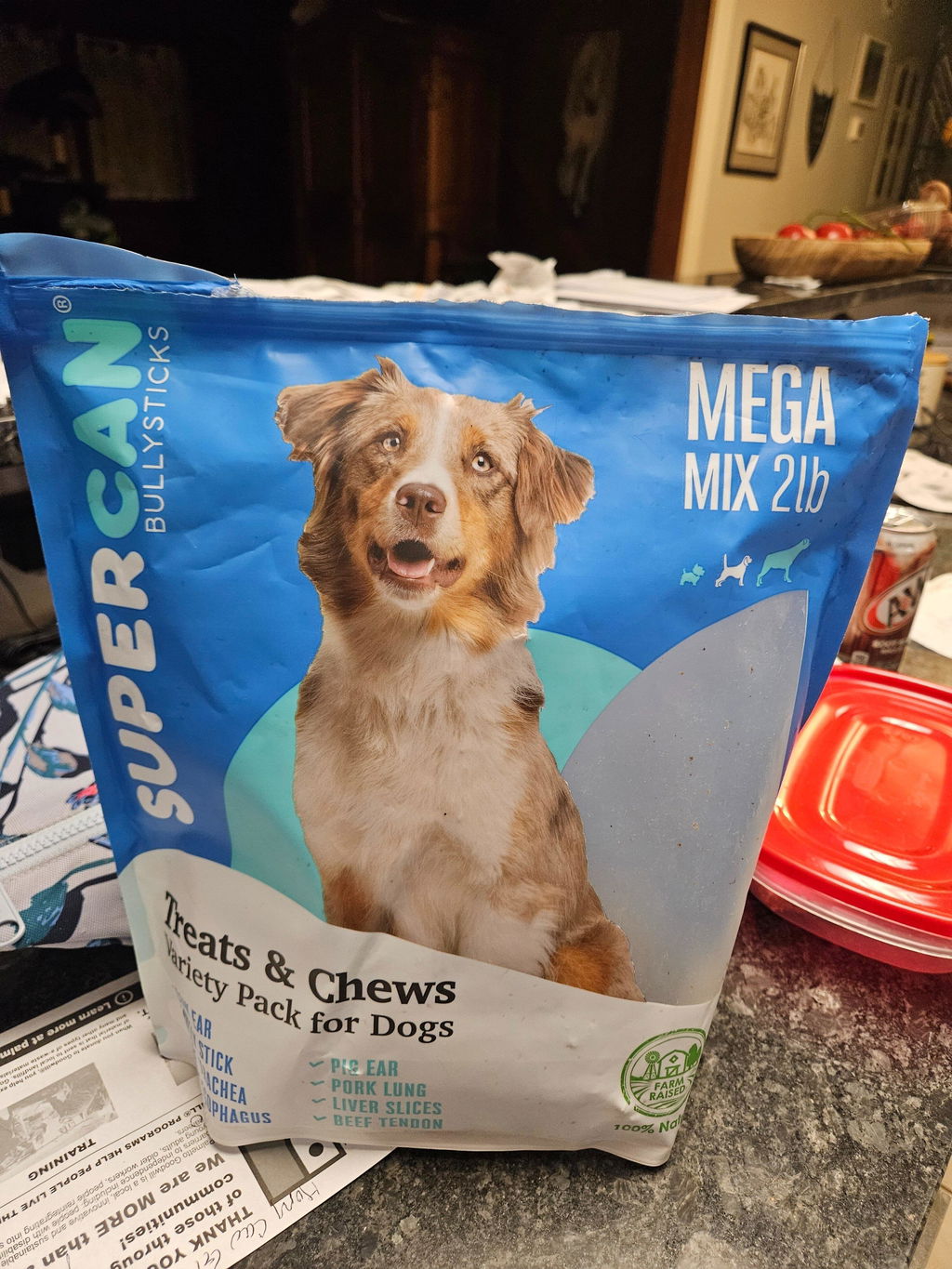
SuperCan's 6" Braided Pork Pizzle combines braided structure with pork flavor — perfect for dogs who need longer-lasting chews or prefer pork over beef.